
Useful Information
Contact Us
Address
Camino los vivitos 21, 38627- Arona, Spain
Phone
+34 613 13 05 76
Mobile
+34 613 13 05 76
Technologies Used
Frontend Technologies
NextJS 16
Backend Technologies
MongoDB, Redis
Loading animation is provided by

Crude avocado oil is essentially the unrefined oil pressed from the pulp (and often the seed) of avocado fruits. Industry sources describe it as “a slightly amber-colored fatty liquid, obtained by physical extraction of the avocado pulp and the seed”. In practice, crude avocado oil is obtained by mechanical methods (centrifugal or pressing) without extensive refining. True extra-virgin avocado oil is produced by cold-pressing at low temperatures (typically below ~50 °C) with no chemical solvents, whereas refined oil undergoes filtration and deodorization to neutralize free acids and remove odors. Thus, crude avocado oil retains more of the fruit’s natural pigments, flavors and micronutrients (such as chlorophyll, carotenoids and antioxidants) than highly refined grades, resulting in its characteristic green-golden hue and mild buttery aroma.
Avocado oil is prized for its healthy fat profile and micronutrients. It is very high in monounsaturated fat (primarily oleic acid, an omega-9 fatty acid), comprising roughly 60–70% of its fat content. Saturated fats (mostly palmitic acid) make up only about 12–16%, and polyunsaturated fats (mainly linoleic acid) about 13–16%. This balance is similar to olive oil and contributes to avocado oil’s reported heart-healthy effects. In addition to fatty acids, crude avocado oil contains appreciable levels of micronutrients: for example, studies find ~3.3–4.5 mg of phytosterols per gram of oil (notably β-sitosterol and stigmasterol). It also carries fat-soluble antioxidants such as carotenoids (like lutein and zeaxanthin) and tocopherols (forms of vitamin E), along with small amounts of squalene and other minor lipids.
The health literature links avocado oil’s composition to several benefits. Its high oleic acid content is believed to support cardiovascular health by improving lipid profiles. Animal studies, for example, showed that avocado oil supplementation significantly reduced blood pressure and lowered LDL (“bad”) cholesterol, effects comparable to those of olive oil. Avocado oil is also a good dietary source of lutein, a carotenoid with antioxidant properties that is important for eye health. Because of its richness in healthy fats, adding avocado oil to meals can dramatically enhance absorption of fat-soluble nutrients (like vitamins A, D, E and K and dietary carotenoids). Some clinical research further suggests that formulations of avocado and soybean oil extracts (so-called avocado-soybean unsaponifiables, or ASU) can relieve joint pain and stiffness in osteoarthritis, owing to their anti-inflammatory effects. For skin and hair, avocado oil’s combination of monounsaturated fats, vitamins (including provitamin A and E) and phytosterols makes it an excellent emollient and moisturizer. Its nutrients promote skin regeneration and barrier repair, which is why avocado oil is valued in cosmetics and topical applications.
Crude avocado oil’s versatile properties have led to wide-ranging uses. In the kitchen, it serves as a premium edible oil for cooking and dressing. Refined avocado oil has a very high smoke point (around 500–520 °F or 260–270 °C), making it suitable for high-temperature cooking, frying and industrial food processing. Even unrefined (virgin) avocado oil is used in salad dressings, spreads, dips and gourmet recipes where its mild, buttery flavor can be appreciated. Avocado oil is increasingly incorporated into processed foods (like canned or frozen meals) for its nutritional profile and stability.
In cosmetics and personal care, avocado oil is prized for its nourishing qualities. Its high content of oleic acid, vitamins A and E, and potassium makes it an effective skin emollient and hair moisturizer. It is found in lotions, creams, hair oils and serums designed for anti-aging, hydration and scalp health. The oil’s antioxidants and fatty acids help to replenish lipids in skin and soothe irritation, so it appears in formulations from natural skincare brands to spa products.
Avocado oil is also sold as a dietary supplement, either in liquid form or as capsules. Oil capsules can provide a source of “good” fats (monounsaturated and omega-3/6) and are marketed for heart health and general wellness. Moreover, avocado/soy unsaponifiables (ASU) are used as nutraceuticals for joint support; these standardized extracts of avocado and soybean oil have been clinically shown to relieve osteoarthritis symptoms.
On the industrial side, research has explored novel uses of avocado oil. Scientists have used avocado oil to formulate nanoemulsions and structured lipids for functional foods, enhancing stability and nutritional quality. It has even been studied as a renewable carbon source: for example, adding avocado oil to bacterial fermentations can boost production of biodegradable polyhydroxyalkanoate (PHA) bioplastics. Additionally, avocado oil has potential as a biofuel feedstock: fatty-acid methyl esters made from avocado oil yield a high cetane number (~59) and fuel properties comparable to common vegetable oil biodiesels. These industrial applications remain relatively specialized, but they underscore avocado oil’s functional versatility beyond food and cosmetics.
Global avocado production is heavily concentrated in certain regions, which in turn shapes avocado oil supply. Latin America dominates fruit output: for example, Mexico produces roughly one-third of the world’s avocados (over 2.5 million metric tonnes in 2022). Other major Latin American producers include Peru (~866,000 tonnes in 2022) and Colombia, while Chile, Brazil and Argentina also contribute significantly. This vast fruit harvest in South America supplies much of the raw material for avocado oil processing. Notably, Peru and Chile have been expanding cold-pressed oil production for export, often in organic or gourmet niches. Mexico’s established avocado infrastructure also supports large-scale oil extraction and refining, and Mexican processors report steady growth in avocado oil shipments to North America and Europe.
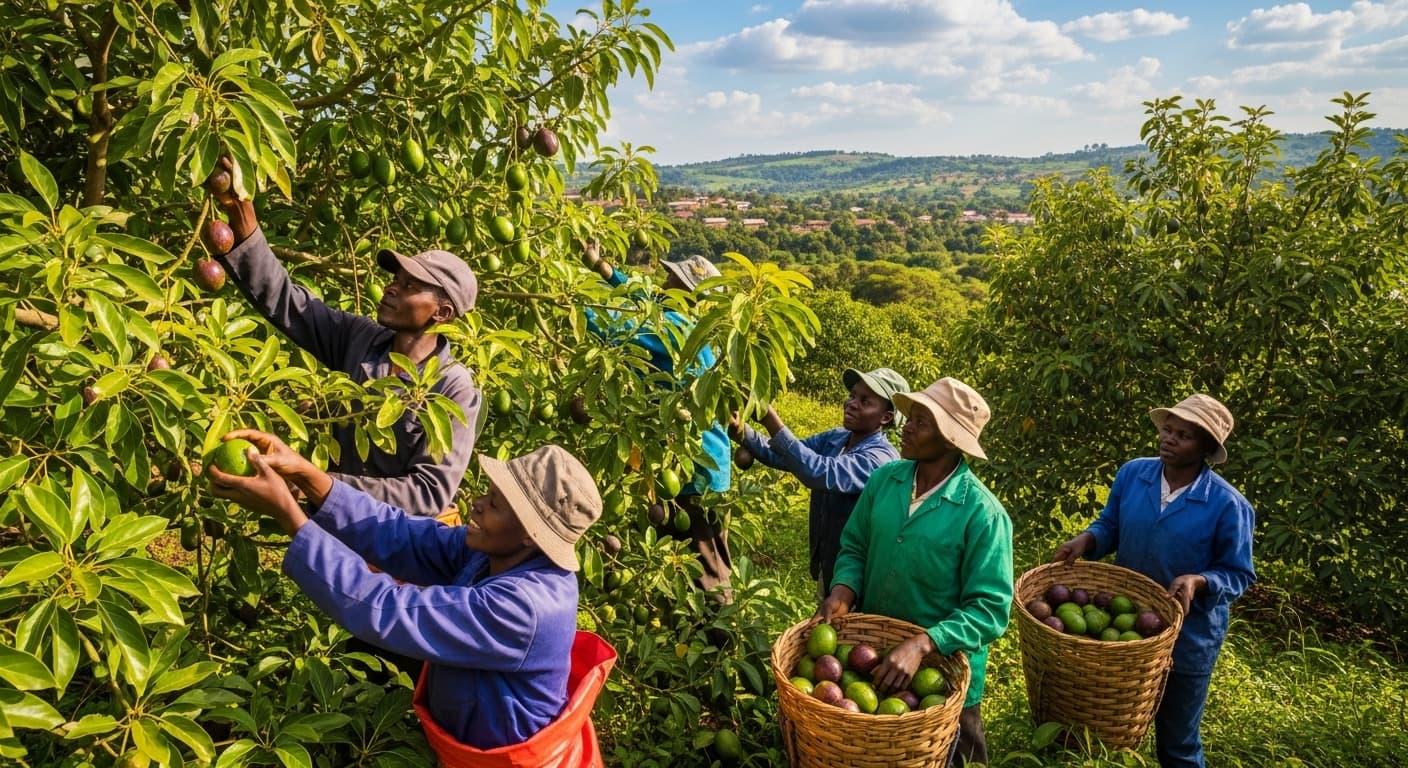
In Africa, avocado agriculture is smaller but growing. Between 2018 and 2022, Africa’s avocado output rose sharply (from ~882,000 tonnes in 2018 to ~1.22 million tonnes in 2022), averaging about 13% of global production. Kenya is the continent’s largest grower, producing ~458,000 tonnes in 2022 (about 38% of Africa’s total). Other key African producers include Ethiopia, South Africa (103,600 tonnes in 2022), Morocco and Malawi. In Southern Africa, South Africa and Eswatini together produced roughly 104,500 tonnes in 2022 (8.6% of Africa’s total). Much of this African avocado output has historically been sold as fresh fruit, but in recent years several African processors have begun extracting oil. For instance, Uganda’s Avolio was known as a leading supplier of crude avocado oil, and companies like ZimTrade are promoting oil production projects in Zimbabwe. These trends indicate that both African and South American regions are becoming important centers of avocado oil production, leveraging their abundant fruit supplies.
Trade data show that certain countries dominate avocado oil exports. Mexico is the clear leader: in a recent 12-month period (mid-2024 to mid-2025), Mexican exporters shipped the equivalent of about 4,410 avocado oil consignments – by far the highest volume globally. The United States (often a processing and re-export hub) was second with ~1,548 shipments, and Spain third with ~1,388 shipments. Total avocado oil export shipments have been rising rapidly; one analytics report notes a ~68% year-over-year increase in export volume (ships) comparing mid-2023 to mid-2024. This surge reflects growing global demand and expanding production. While official trade codes do not always distinguish crude from refined oil, these figures indicate broad expansion of the avocado oil market. In practical terms, this means that Mexico (with its vast avocado farms and new cold-press facilities) remains the top source of both crude and refined avocado oil, exporting to North America, Europe and Asia. Spain’s exports largely serve EU markets. Other notable exporters include Peru and Chile in Latin America (which have boosted cold-pressed oil production), and exporters from Africa such as Kenya and South Africa that are beginning to supply international buyers. The overall trend is one of fast-growing exports from traditional avocado regions, with new entrants helping to diversify the supply chain.
The United States is by far the largest importer of avocado oil. Recent trade data indicate the U.S. imported over 5,600 avocado oil shipments in a 12-month span (2024–2025), far more than any other country. Neighboring markets in Central America also import significant quantities: for example, Mexico received nearly 1,000 shipments and Panama about 850 in the same period. These figures reflect strong North American demand – driven by culinary and health food markets as well as the presence of large food companies.
Beyond North America, demand is growing worldwide. In Europe, Poland has emerged as a top avocado oil market; one trade estimate values Poland’s avocado oil imports at roughly $140.8 million in 2023. Other European countries (such as Italy, Germany, and the Netherlands) are also significant buyers, often refining or blending the oil for EU consumers. In Asia-Pacific, the Philippines is a leading importer ($53.2 million in 2023), reflecting a regional uptake in exotic oils. India is another rising market: Indian imports of avocado oil have been recorded from suppliers in France, Mexico and Kenya, and market analysts forecast steady growth in India’s avocado oil sector. Latin American countries like Argentina are also importing oil (Argentina’s avocado oil imports were ~$24.6 million in 2023), often to supplement domestic production. Even some Middle Eastern and African countries have begun importing avocado oil for local food and cosmetic industries. In summary, while North America currently leads overall consumption, robust demand is emerging across Europe, Asia and other regions, fueled by health trends and culinary interest.
The avocado oil industry includes a mix of large processors and specialty brands. In Latin America and globally, many key players are centered in Mexico. Mexican companies such as Grupo Industrial Batellero, SESAJAL and Ahuacatlán are known producers of bulk crude and refined avocado oil. These firms supply ingredients for food manufacturers, distributors and exporters. In the United States and Europe, well-known brands like Chosen Foods, La Tourangelle, Olivado (New Zealand) and Bella Vado market avocado oil directly to consumers. Organic and health-food companies (e.g. Kevala, Spectrum Organics) also feature avocado oil in their product lines. In India and Asia, companies such as AOS Products have begun importing and distributing avocado oil.
Major food businesses are also eyeing avocado oil. For instance, Fresh Del Monte Produce (a global fruit exporter) announced in 2025 that it would acquire Avolio, Uganda’s leading avocado oil processor. This move underscores growing corporate interest in avocado oil as a specialty ingredient. Other agribusinesses and cooperatives (for example, Zimbabwe’s Navaco Global partnering with government trade bodies) are investing in new oil-processing facilities to capture value from local avocado crops. On the supplement front, natural products companies manufacture avocado/soy unsaponifiable (ASU) extracts under various brands for joint health. And in cosmetics, numerous skin care and haircare manufacturers use avocado oil as an ingredient in premium formulations.
Overall, the industry’s leading players include vertically integrated exporters (with their own orchards and mills), independent oil extractors, and branded product companies. Together, they span the value chain from fruit growing in Latin America and Africa to oil pressing, refinement and final retail. Their growth and investment continue to shape the evolving crude avocado oil market.
AvecAfrica supplies crude avocado oil to importers and manufacturers worldwide. We offer bulk shipment starting at 15,000 MT, packed in 24,000 L flexitanks for safe, cost-efficient transport. For competitive quotations, specifications (COA, spec sheet) and long-term supply agreements, please contact our sales team.
Classification Method for Avocado Oil – SIMEC OIL PRESS
https://www.simecoilpress.com/oil/classification-method-for-avocado-oil
Avocado Oil: Characteristics, Properties, and Applications - PMC
https://pmc.ncbi.nlm.nih.gov/articles/PMC6600360/
Evidence-Based Health Benefits of Avocado Oil
https://www.healthline.com/nutrition/9-avocado-oil-benefits
Frontiers | Soybean and avocado unsaponifiables: a review of their potential use in the treatment of osteoarthritis
https://www.frontiersin.org/journals/veterinary-science/articles/10.3389/fvets.2024.1473688/full
Latin America Avocado Oil Market Size, Share & Trends, 2033
https://www.marketdataforecast.com/market-reports/latin-america-avocado-oil-market
Avocado Oil Market Size to Capture USD 1,315.84 Million by 2034
https://www.towardsfnb.com/insights/avocado-oil-market
Avocado Production by Country 2025
https://worldpopulationreview.com/country-rankings/avocado-production-by-country
Avocado Oil Exports from World - Volza
https://www.volza.com/p/avocado-oil/export/
Avocado Oil Imports in World - Volza
https://www.volza.com/p/avocado-oil/import/
Avocado Oil global imports and top importers 2024
https://www.tridge.com/intelligences/avocado-oil/import
Avocado Oil Imports in India - Volza
Adalidda
Mrs. Susa Taing
General Manager
65 C Street 101
Phnom-Penh
Cambodia
WhatsApp/Telegram: +85569247974
Email: info@adalidda.com